
Robotic Knee Replacement Clinic in Mumbai
At Navkaar Hospitals, we provide robotic knee replacement in Mumbai, combining robotic-assisted surgical technology with specialist orthopedic care. Located in Bhandup West, our hospital offers knee assessment, treatment planning, knee replacement surgery and post-operative care for patients dealing with advanced knee problems.
Robotic-assisted knee replacement brings together the skill of an orthopedic surgeon and technology that supports surgical planning and certain steps of the procedure. The robotic system does not operate on its own. The surgeon stays in full control and makes every treatment decision based on your individual knee condition.
If knee pain, stiffness or arthritis is affecting how you walk or go about your day, an orthopedic consultation can help you understand whether knee replacement treatment is right for you, or whether another option should be tried first.
Robotic Knee Replacement in Bhandup, Mumbai
Knee pain is common, and most people experience some form of it over the years. But pain that is severe or lasts for months should not be ignored. Advanced knee arthritis can wear down the joint and slowly make everyday movement, walking, climbing stairs, or getting up from a chair, harder than it used to be.
Treatment does not always mean surgery. In the early stages, an orthopedic specialist will usually try medicines, physiotherapy, exercise, weight management or injections first.
Surgery becomes a real consideration only when these options stop giving enough relief and the joint damage has become significant. At that point, knee replacement surgery in Mumbai may be discussed as the next step.
Patients in Bhandup West can visit our hospital for an orthopedic evaluation to understand what is causing their knee pain and to go through the treatment options available, including whether a robotic-assisted procedure would be a good fit for their case.
What Is Robotic Knee Replacement?
Robotic knee replacement is a form of knee replacement surgery in which a robotic-assisted system helps the orthopedic surgeon plan and carry out certain parts of the operation.
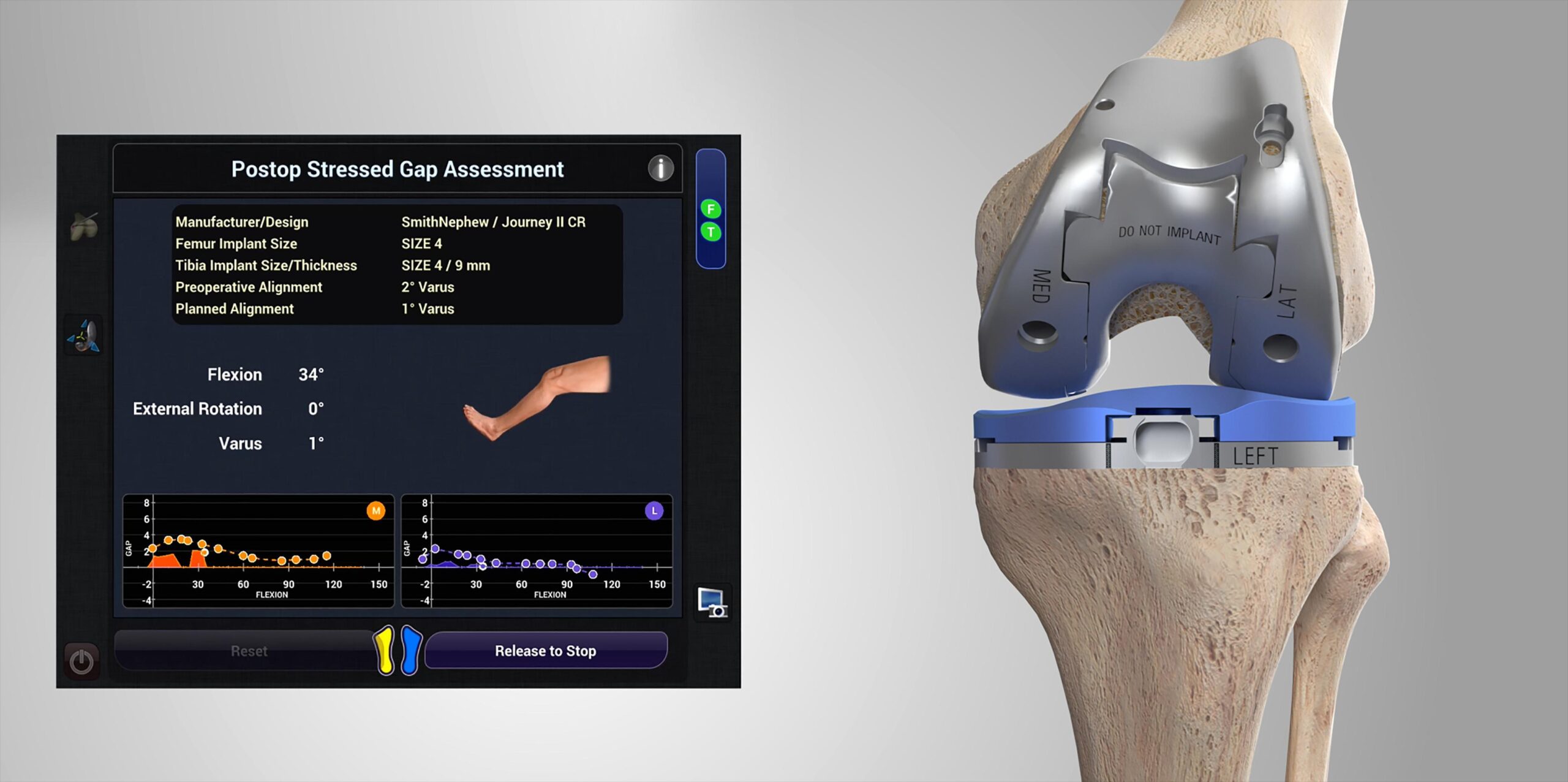
The system builds a detailed picture of your knee anatomy and uses it to support surgical planning. During the operation, it can assist with bone preparation and implant positioning, always following the plan set by the surgeon.
One thing worth understanding clearly: the robot does not replace the surgeon. The orthopedic surgeon performs and controls the operation from start to finish and makes every decision along the way. Robotic assistance is just one part of the overall treatment. Your diagnosis, the implant chosen, the surgical technique used, your general health and your rehabilitation all play a part in how you recover.
How Does Robotic Knee Replacement Surgery Work?
Treatment starts well before the day of surgery, with an assessment by an orthopedic surgeon.
- Orthopedic consultation and knee assessment. The surgeon reviews your pain, stiffness, walking ability and previous treatments, along with a physical exam and imaging such as X-rays.
- Treatment planning. If knee replacement is needed, the surgeon decides between total knee replacement or partial knee replacement based on how much of the joint is damaged, knee stability and your overall health.
- Robotic-assisted surgical planning. The robotic system uses information about your knee anatomy to help tailor the surgical plan to your individual joint rather than a standard template.
- Bone preparation. During robotic knee surgery, the surgeon prepares the damaged areas with guidance from the robotic system while staying fully in control.
- Implant placement. The artificial knee components are positioned according to the surgical plan, with the surgeon checking alignment and making the final call.
- Post-surgery care. Recovery continues once the operation is over, with pain management, early movement, physiotherapy and follow-up visits.
Smith+Nephew CORI Robotic Surgical System
Navkaar Hospitals uses the Smith+Nephew CORI robotic surgical system for robotic-assisted knee replacement, suitable for both total and partial knee replacement procedures.
In simple terms, the CORI system supports patient-specific surgical planning and gives the surgeon real-time information about bone shape and joint alignment while the operation is underway. It is a surgical tool, not an independent surgeon. Your orthopedic surgeon remains responsible for the treatment plan and controls the operation throughout, based on your individual anatomy and condition.
Who May Need Robotic Knee Replacement?
Robotic knee replacement is not something every patient with knee pain needs. There is no single age or pain score that decides when surgery becomes necessary. An orthopedic surgeon typically considers it when arthritis or joint damage has become severe enough to affect quality of life, and when other treatments have not brought enough relief.
You may want to discuss knee replacement with a specialist if you notice:
- Persistent or severe knee pain
- Advanced arthritis or joint damage
- Knee stiffness or reduced movement
- Difficulty walking, climbing stairs or getting up from a chair
- Repeated swelling
- Pain that disturbs your sleep or daily activities
- Little improvement despite medicines or physiotherapy
Your surgeon’s decision is based on more than just an X-ray. It takes into account your symptoms, the physical examination, imaging, your medical history and how you have responded to earlier treatment. If your symptoms are still manageable with non-surgical care, surgery may not be needed just yet.
Total Knee Replacement or Partial Knee Replacement?
The type of surgery needed depends on how much of the knee is affected.
Total knee replacement replaces the damaged surfaces of the entire knee joint. It is generally considered when arthritis has spread across multiple parts of the knee. Robotic assistance can support surgical planning and bone preparation for this procedure.
Partial knee replacement replaces only the damaged section of the joint, leaving healthy bone and ligaments in place. It can work well when arthritis is limited to one area of the knee and the rest of the joint is still healthy enough to preserve. Not every patient is a candidate for this option. Your surgeon will assess your knee carefully before recommending it.
Benefits of Robotic Knee Replacement
Robotic-assisted knee replacement is designed to support the surgeon with detailed planning and more controlled surgical steps. Depending on the patient’s condition, this may help with:
- Personalised planning. The surgical and treatment plan can be built around your individual knee anatomy rather than a standard template.
- Bone preparation. Robotic guidance can support more controlled preparation of the damaged areas.
- Implant positioning and alignment. The technology can assist the surgeon in planning implant placement and knee alignment.
It is worth being clear that robotic technology does not guarantee a specific result. Your health, the severity of your arthritis, the implant used, the surgical technique and your rehabilitation all influence how well you recover.
Robotic Knee Replacement vs Conventional Knee Replacement
Both procedures are carried out by an orthopedic surgeon. In conventional knee replacement, the surgeon relies on established surgical techniques and manual instruments. In robotic-assisted knee replacement, additional technology supports surgical planning and certain steps of the operation.
Robotic assistance does not take the surgeon out of the process. It simply gives the surgeon more information and tools to work with during surgery. It may suit some patients well, but it is not necessary for everyone. Your surgeon will recommend the approach that fits your knee condition and treatment goals.
Preparing for Knee Replacement Surgery
Before you are admitted, your medical team will usually review your medical history, current medicines, allergies, past surgeries, blood pressure, knee X-rays and any required blood tests. Your anaesthesia requirements are assessed as well.
Your surgeon may also walk you through what to expect during your hospital stay, walking support after surgery, the physiotherapy plan and care once you go home. If you take regular medicines or have another medical condition, make sure your medical team knows about it before surgery.
Recovery After Robotic Knee Replacement
Robotic knee replacement recovery generally follows a structured process, both at the hospital and after you go home, though the exact timeline varies from patient to patient.
- Pain is managed with medication and monitored closely in the days after surgery.
- Early movement is usually encouraged within a day or two.
- Walking with support, such as a walker, typically begins under supervision.
- Physiotherapy starts early to help restore knee movement and strength.
- Wound care and follow-up visits track how well you are healing.
- Return to daily activities happens gradually, based on how your knee responds to rehabilitation.
Recovery depends on factors such as your age, general health, muscle strength, the type of knee replacement performed and how closely you follow your rehabilitation plan. We do not promise a fixed recovery time, and it is not fair to compare your progress directly with someone else’s. Your orthopedic surgeon and physiotherapist will guide you based on how your own recovery is going.
Physiotherapy After Knee Replacement
Physiotherapy after knee replacement is a key part of your overall treatment, not an optional extra. Exercises usually focus on improving knee movement, strengthening the leg muscles, improving your walking pattern and balance, and easing stiffness.
Your physiotherapist will guide you through exercises suited to your particular stage of recovery. Sticking to your prescribed rehabilitation plan and attending follow-up appointments can help you work steadily towards better knee function over time.
How Long Do Knee Replacement Implants Last?
Implant lifespan is not the same for every patient. Age, activity level, body weight, implant type, surgical technique and general health can all affect how long a knee replacement implant continues to perform well. Your orthopedic surgeon can walk you through the implant options available and explain the factors that may affect durability during your consultation.
Robotic Knee Replacement Cost in Mumbai
Many patients search for robotic knee replacement cost in Mumbai before they decide on treatment. We do not quote a fixed price on this page, since the total cost depends on your individual treatment plan.
Factors that can affect the cost include:
- Type of knee replacement, total or partial
- Implant selected
- Surgeon and hospital charges
- Robotic technology charges
- Pre-surgery investigations and anaesthesia
- Operating room charges and length of hospital stay
- Medicines, physiotherapy and rehabilitation
For an accurate estimate, it is best to book an orthopedic assessment rather than rely on a general figure you find online.
Why Choose Navkaar Hospitals for Robotic Knee Replacement?
A good knee replacement hospital in Mumbai needs to offer more than just surgical technology. Patients also need proper diagnosis, careful treatment planning, attentive surgical care and consistent follow-up.
At Navkaar Hospitals, patients can access:
- Smith+Nephew CORI robotic surgical technology
- Orthopedic consultation, clinical assessment and treatment planning
- Robotic-assisted knee replacement when appropriate, including total and partial options
- Hospital-based surgical care with post-operative monitoring
- Physiotherapy and rehabilitation guidance
- A convenient location in Bhandup West, Mumbai, easily reached from Mulund, Vikhroli, Kanjurmarg, Nahur and Powai
When Should You See an Orthopedic Surgeon for Knee Pain?
If you are dealing with persistent knee pain, stiffness, repeated swelling, reduced movement, difficulty walking or climbing stairs, or pain that affects your sleep or daily routine, it is worth booking a consultation with an orthopedic surgeon near Bhandup.
During the consultation, your surgeon should explain what is causing your knee pain, whether you need surgery, which type of knee replacement may suit you, whether robotic assistance makes sense in your case, and what recovery is likely to look like. You should always feel comfortable asking questions before deciding on treatment.
Services
- Acetabular osteotomy
- Ankle arthroscopy
- Bankart repair
- Bone grafting
- Cartilage repair
- Cervical spine fusion
- Disk replacement
- Diskectomy
- Elbow arthroscopy
- External fixation
- Finger fusion
- Foraminotomy

Department Team
Frequently Asked Questions
What is robotic knee replacement?
Robotic knee replacement is a type of knee replacement surgery where robotic technology assists the orthopedic surgeon with surgical planning and certain steps during the procedure.
Is robotic knee replacement performed by a robot?
No. The orthopedic surgeon performs and controls the surgery from start to finish. The robotic system supports the surgeon with information and guidance, it does not operate independently.
Who is suitable for robotic knee replacement?
Patients with significant arthritis or joint damage who may need knee replacement can be assessed for robotic-assisted surgery. Whether it is the right fit depends on your knee condition and a proper medical assessment.
Is robotic knee replacement better than traditional knee replacement?
Robotic assistance gives the surgeon additional tools for planning, but it is not automatically the better choice for every patient. Your surgeon will recommend the approach that suits your condition best.
How long does robotic knee replacement surgery take?
Surgery time can vary depending on the type of knee replacement, your condition and how complex the procedure turns out to be. Your surgeon can give you a clearer estimate after assessment.
How soon can I walk after knee replacement?
Many patients begin moving and walking with support soon after surgery. Exactly when depends on your health, the surgery performed and how your body responds in the first few days.
Do I need physiotherapy after knee replacement?
Yes. Physiotherapy after knee replacement plays a central role in recovery and helps you regain movement, strength, walking ability and confidence in daily activities.
What affects robotic knee replacement cost in Mumbai?
Cost can depend on the type of surgery, the implant used, hospital and surgeon charges, robotic technology, pre-surgery tests, hospital stay, medicines and rehabilitation.
How long do knee replacement implants last?
Implant lifespan differs from one patient to another. Your surgeon can explain the expected durability of your chosen implant and the factors that may affect it.
Book a Robotic Knee Replacement Consultation in Mumbai
If knee pain is getting in the way of your walking, mobility or daily activities, an orthopedic assessment can help you understand your options. Patients looking for robotic knee replacement in Mumbai or robotic knee replacement in Bhandup are welcome to consult the orthopedic team at Navkaar Hospitals. Book a consultation to talk through your knee condition and find out whether robotic-assisted knee replacement is right for you.