
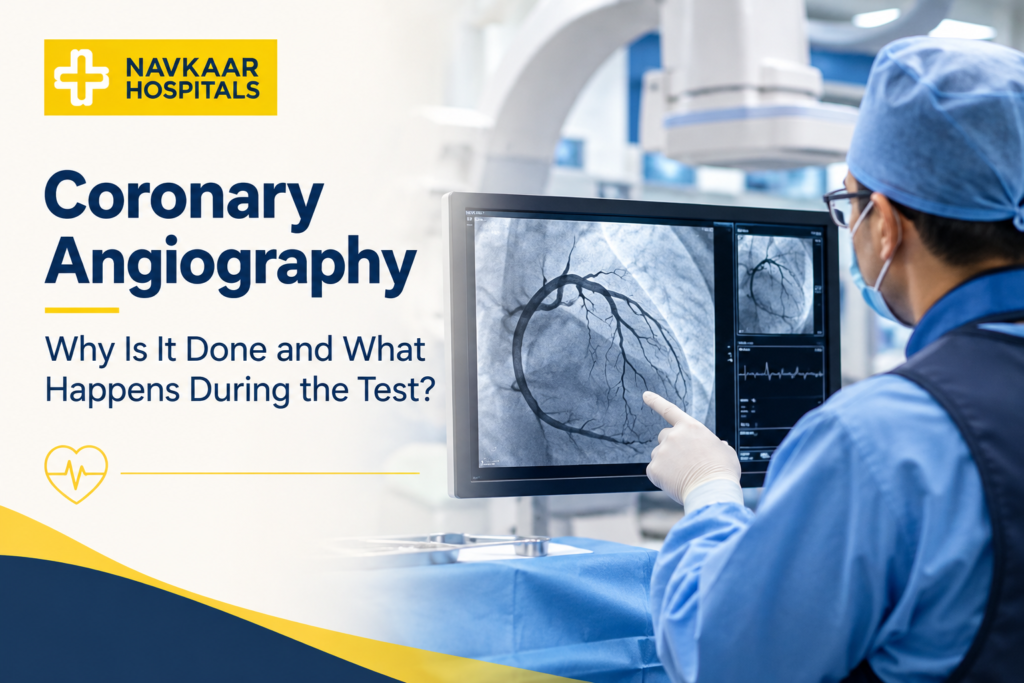
When a cardiologist recommends coronary angiography, it is natural to have questions about why the test is needed, whether it will hurt and what the results might mean. Understanding the procedure can help you feel more prepared and know what to expect.
Coronary angiography is a diagnostic procedure that uses X-ray imaging and contrast material to examine the arteries supplying blood to the heart. It helps doctors identify narrowed or blocked arteries and decide whether further treatment may be needed. The test is usually performed using a thin tube called a catheter inserted through an artery in the wrist or groin.
Your cardiologist may recommend it after assessing your symptoms, medical history and other heart investigations. This guide explains the reasons for the test, preparation, procedure, possible risks, results and recovery.
What Is Coronary Angiography?
Coronary angiography, also called a coronary angiogram, is an imaging test used to examine the coronary arteries. These blood vessels carry oxygen-rich blood to the heart muscle. You may also hear it called cardiac angiography or heart angiography.
Fatty deposits called plaque can build up inside the arteries, causing them to narrow. This condition is known as coronary artery disease. Significant narrowing can reduce blood flow to the heart and may contribute to chest pain or a heart attack.
During invasive coronary artery angiography, a cardiologist guides a thin catheter through a blood vessel towards the heart. A contrast material is injected through the catheter, making the coronary arteries visible on X-ray images. These images help identify the location and extent of any narrowing, which is why it works as a reliable heart blockage test.
The procedure is performed in a specialised cardiac catheterisation laboratory. It provides information that may not be available from symptoms or non-invasive tests alone.
Why Is Coronary Angiography Done?
Many patients ask why is coronary angiography done. The short answer is that doctors recommend it when they need a clearer view of the coronary arteries to investigate or assess a suspected heart condition.
Reasons may include:
- Persistent or concerning chest pain: Especially when symptoms suggest angina or reduced blood supply to the heart.
- Suspected heart attack: Urgent angiography may help identify a blocked artery and guide immediate treatment.
- Abnormal cardiac test results: Findings from an exercise stress test or other investigations may indicate a need to examine the coronary arteries more closely.
- Unexplained symptoms: Certain patterns of breathlessness or pain in the chest, arm, jaw or neck may require further assessment.
- Known coronary artery disease: The test may be considered if symptoms worsen or the patient’s condition changes.
- Planning heart treatment: Angiography can help doctors assess the arteries before deciding whether medication, angioplasty or bypass surgery may be appropriate.
Not everyone with chest pain needs invasive angiography. A cardiologist considers the symptoms, risk factors, other test results and potential benefits and risks before recommending it.
If you have sudden chest pressure, severe breathlessness, cold sweating or other possible heart attack symptoms, seek emergency medical care rather than waiting for a scheduled appointment.
What Is the Difference Between Coronary Angiography and CT Coronary Angiography?
Although the names are similar, these tests use different methods.
Invasive coronary angiography involves inserting a catheter into an artery and injecting contrast material to obtain X-ray images of the coronary arteries. If a significant narrowing is identified, treatment may sometimes be performed during the same session.
CT coronary angiography (CCTA) uses a CT scanner to create detailed images of the coronary arteries after contrast material is given through a vein. It does not require a catheter to be threaded into the coronary arteries. It can help assess suspected coronary artery disease in appropriately selected patients.
CT coronary angiography is primarily a diagnostic test. If it reveals a concerning narrowing, the cardiologist may recommend further assessment, which could include invasive coronary angiography.
The choice depends on the clinical situation, kidney function, heart rate, other medical conditions and the information the doctor needs.
How to Prepare for Coronary Angiography
Good coronary angiography preparation starts with the instructions your hospital gives you, since they are based on your health and the planned procedure. It usually includes the following steps.
Discuss your medical history. Tell your cardiologist about existing medical conditions, previous heart procedures and any history of kidney problems or bleeding.
Share your medication list. Include prescription medicines, non-prescription medicines and supplements. Ask specifically about blood thinners and diabetes medicines. Do not stop or change any medication unless your treating clinician instructs you to do so.
Report allergies or previous contrast reactions. Tell the medical team if you have previously reacted to contrast material or had another significant allergic reaction.
Follow fasting instructions. You may be asked to avoid food and drink for a specified period before the test. The exact timing depends on the hospital’s protocol and your circumstances.
Complete recommended tests. Blood tests and kidney function checks may be required. Your team may also review your blood sugar, blood pressure and other relevant results.
Arrange transport if needed. If you receive sedation or are advised not to drive after the procedure, organise someone to take you home.
Bring your reports. Carry your previous cardiac reports and current medication list. If you are unsure about any instruction, contact your care team before the procedure.
What Happens During the Coronary Angiography Procedure?
The coronary angiography procedure generally involves several steps.
1. Preparing in the catheterisation laboratory
You will change into a hospital gown and lie on an examination table. The team checks your vital signs and attaches monitoring equipment to observe your heart rhythm and other important measurements.
2. Giving local anaesthesia
The wrist or groin area is cleaned with an antiseptic solution. Local anaesthesia is injected to numb the area where the catheter will enter the artery. You may feel a brief sting when the anaesthetic is given.
3. Inserting the catheter
The cardiologist inserts a short tube into the artery and carefully guides the catheter towards the coronary arteries using X-ray guidance.
The catheter usually travels through the blood vessels without you feeling it moving inside them. The access site may feel uncomfortable, but you should tell the team if you experience significant pain.
4. Injecting contrast material
Contrast material is passed through the catheter so the coronary arteries can be seen on X-ray images. The cardiologist takes images from different angles to examine blood flow and identify areas of narrowing.
You may notice a brief warm sensation when the contrast is injected. This usually passes quickly.
5. Completing the test
Once the required images have been obtained, the catheter is removed. The team applies pressure or uses an appropriate closure method to control bleeding at the access site.
If a significant blockage is identified, the cardiologist discusses the findings and possible next steps. Angioplasty may sometimes be performed during the same session, depending on the clinical circumstances and the agreed treatment plan.
Is Coronary Angiography Painful?
The angiography test is generally performed using local anaesthesia at the catheter entry site. You may feel a short sting from the anaesthetic injection, pressure where the catheter is inserted or mild discomfort during parts of the procedure.
The contrast injection can cause a temporary feeling of warmth. Some patients feel anxious about being in the catheterisation laboratory, so tell the team if you are uncomfortable or worried.
Experiences vary from person to person. The procedure should not be described as completely painless, and you should report any significant discomfort to the medical team.
How Long Does a Coronary Angiogram Take?
The diagnostic procedure often takes around 30 minutes to an hour, although the time varies according to the individual case and the complexity of the examination.
This is not the same as the total time spent at the hospital. Registration, preparation, medical checks and post-procedure monitoring can add several hours. If additional treatment is needed or your condition requires closer observation, the overall stay may be longer.
Your hospital team can explain what timing is likely in your situation.
What Do Coronary Angiogram Results Show?
Your coronary angiogram results help the cardiologist assess the coronary arteries and look for narrowing or blockages. As a coronary artery blockage test, it can show where an artery is narrowed and how much.
Results may show:
- No significant narrowing: The images do not reveal a major obstructive blockage in the examined arteries.
- One narrowed artery: A particular coronary artery has an area of reduced internal diameter.
- Narrowing in several arteries: More than one coronary artery may be affected.
- A severe or complete blockage: Blood flow through an artery may be substantially restricted or interrupted.
The report may describe the location and estimated severity of the narrowing. However, the significance of a finding depends on more than the image alone. Symptoms, heart function, other test results and the overall clinical picture also matter.
A normal coronary angiogram can be reassuring, but it does not rule out every possible cause of chest pain or every type of heart condition. Your cardiologist can explain whether further investigation is appropriate.
What Happens If a Blockage Is Found?
Finding a narrowed artery does not automatically mean that surgery or a stent is required. Treatment depends on the location and severity of the narrowing, symptoms, other medical conditions and the overall risk to the patient.
Possible options include:
- Medication and lifestyle changes: Some patients are managed with prescribed medicines and advice on diet, physical activity, smoking cessation and controlling conditions such as diabetes or high blood pressure.
- Angioplasty with or without a stent: A balloon is used to widen a narrowed artery. A small mesh tube called a stent may be placed to help keep the artery open.
- Coronary artery bypass surgery: In selected cases, surgery may be considered to create alternative routes for blood to reach the heart muscle.
The cardiologist will explain the available options and why a particular approach may be suitable. In an emergency, treatment decisions may need to be made quickly.
Coronary Angiography Risks and Possible Complications
Coronary angiography is commonly performed, but it is an invasive procedure, so the coronary angiography risks are worth understanding. The likelihood of complications varies according to the patient’s health, kidney function, existing heart disease and other factors.
Possible complications include:
- Bleeding or bruising: The wrist or groin entry site may bleed, become bruised or develop a collection of blood beneath the skin.
- Blood vessel injury: The artery used for catheter insertion may be damaged.
- Reaction to contrast material: Some patients develop an allergic-like reaction to the contrast agent.
- Kidney complications: Contrast material can contribute to kidney injury, particularly in people with existing kidney problems or other risk factors.
- Abnormal heart rhythms: Temporary changes in the heartbeat may occur during the procedure.
- Rare serious complications: Heart attack, stroke and other severe complications can occur, although they are uncommon.
Your cardiologist will consider your individual risk factors and explain the expected benefits and possible complications. Tell the team about kidney disease, previous contrast reactions and any other relevant medical history before the test.
Recovery After Coronary Angiography
Angiography recovery begins right after the procedure, while the team monitors your heart rhythm, blood pressure and catheter entry site. Some patients can return home the same day, while others need overnight observation or a longer hospital stay.
Your recovery instructions will depend on how the procedure was performed and whether additional treatment was provided.
- Care for the entry site: Follow instructions for keeping the wrist or groin area clean and dry. Ask when you can bathe and how to manage the dressing.
- Avoid strenuous activity initially: You may need to avoid heavy lifting, intense exercise or particular arm and leg movements for a specified period.
- Follow medication instructions: Take prescribed medicines as directed. If angioplasty and stenting were performed, follow the cardiologist’s instructions carefully, particularly regarding antiplatelet medicines.
- Attend follow-up appointments: Discuss the results, further tests, treatment options and when to resume your usual activities.
- Follow hydration advice: Ask your care team how much fluid is appropriate, particularly if you have kidney disease or heart failure.
Contact your healthcare team promptly if you notice increasing pain, swelling, redness or other concerning changes at the entry site.
Seek urgent medical attention for chest pain, breathing difficulty, fainting or uncontrolled bleeding. If the entry site is bleeding heavily, apply firm pressure if possible while seeking emergency help. Do not delay emergency care.
Coronary Angiography vs Angioplasty: Key Differences
Although these procedures are related, they serve different purposes.
| Feature | Coronary angiography | Coronary angioplasty |
| Main purpose | Examine coronary arteries | Improve blood flow through a narrowed or blocked artery |
| What happens | Contrast material and X-rays create images of the arteries | A balloon catheter widens the narrowed area |
| Stent placement | Not routinely part of diagnostic angiography | A stent may be placed when clinically appropriate |
| Type of procedure | Primarily diagnostic | Therapeutic |
| Can they happen together? | Yes, angiography may be followed by angioplasty during the same session | May be performed immediately or scheduled separately, depending on the case |
Angiography helps the cardiologist understand the problem. Angioplasty is one possible treatment when the findings and the patient’s condition support it.
Frequently Asked Questions About Coronary Angiography
Why is coronary angiography done?
It is performed to examine the coronary arteries when a doctor suspects coronary artery disease, needs to investigate concerning symptoms or must assess the arteries after certain abnormal cardiac test results or a heart attack.
Is coronary angiography painful?
Local anaesthesia numbs the catheter entry site. You may feel a brief sting from the injection, pressure at the site or a temporary warm sensation when contrast material is injected. Experiences vary.
How long does a coronary angiogram take?
The diagnostic procedure often takes around 30 minutes to an hour. Preparation, monitoring and recovery increase the total time spent at the hospital.
Can angiography detect heart blockage?
Yes. Angiography for heart blockage uses contrast-enhanced X-ray images to identify narrowing or blockages in the coronary arteries and assess their location and extent.
What should I avoid before coronary angiography?
Follow your hospital’s instructions about fasting, medicines and other preparation. Do not independently stop blood thinners, diabetes medicines or any prescribed treatment. Tell the team about allergies and kidney problems.
Can angioplasty be performed during angiography?
Yes, it may be performed during the same session when appropriate. However, finding a blockage does not automatically mean that angioplasty or stenting will be performed.
How long does recovery take?
Some patients return home the same day and resume light activities relatively soon. The timing for normal activities depends on the access site, medical condition and whether additional treatment was performed.
What happens if the angiogram is normal?
If no significant coronary artery narrowing is found, your cardiologist will consider whether medication, follow-up or further tests are needed to investigate your symptoms. A normal result does not exclude every possible heart condition.
Consult a Cardiologist at Navkaar Hospitals
If you have been advised to undergo coronary angiography in Mumbai, understanding the test and discussing your concerns with a cardiologist can help you prepare for the next steps.
Navkaar Hospitals has a cardiology department in Bhandup. Patients can meet the cardiology team to discuss symptoms, test results and the right diagnostic options. If you are considering a coronary angiogram in Mumbai, whether it is necessary depends on an individual clinical assessment.
If you are experiencing symptoms that could indicate a heart attack, seek emergency medical attention immediately rather than waiting for a routine appointment.