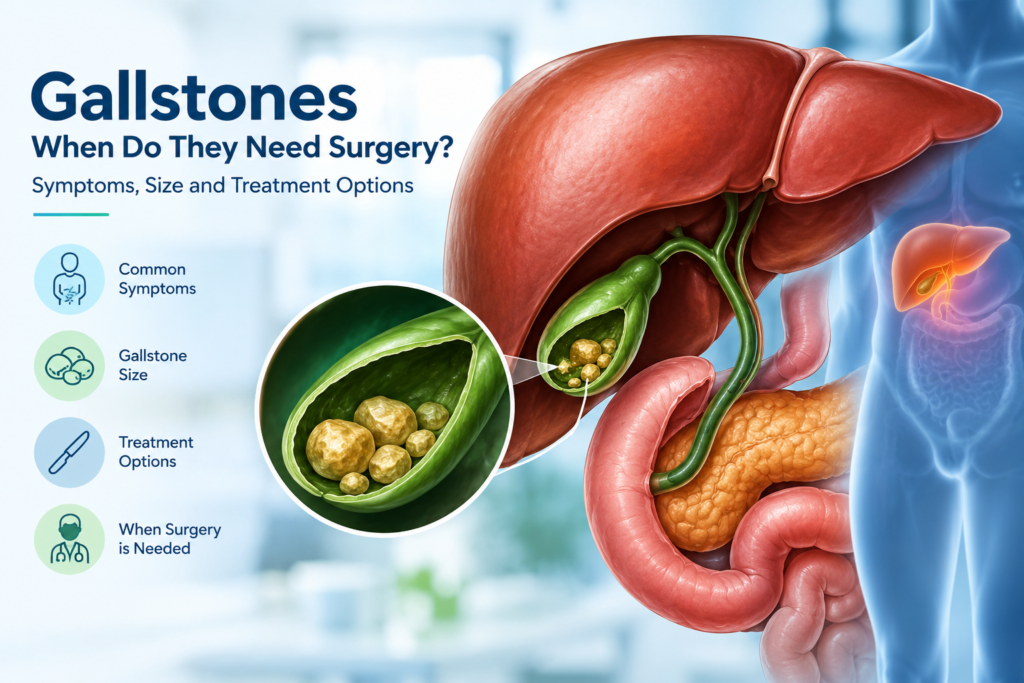
Gallstones are hard deposits that form in the gallbladder, a small organ under the liver that stores bile. Many people carry them for years without knowing. Others develop repeated pain, infection or blockage. This is why some people need gallstones surgery while others only need observation.
The decision depends on symptoms, complications and overall health, not on the stones alone.
What Are Gallstones?
Gallstones form when substances in bile become concentrated and harden. They can be as small as a grain of sand or as large as a golf ball. Some people have one stone, while others have many.
There are two main types:
- Cholesterol stones: The most common type, usually yellow-green, formed when bile contains excess cholesterol.
- Pigment stones: Smaller, darker stones linked to excess bilirubin, seen in certain blood and liver conditions.
What Are the Common Gallstones Symptoms?
Typical gallstones symptoms occur when a stone blocks the flow of bile, even temporarily. They include:
- Pain in the upper right or upper middle abdomen
- Pain that begins or worsens after meals, especially fatty ones
- Nausea or vomiting
- Bloating, gas or indigestion
- Pain that spreads to the back or the right shoulder
These symptoms can also be caused by acidity, ulcers or liver problems, so proper evaluation with an examination and ultrasound is important.
What Does a Gallstone Attack Feel Like?
Gallstone attack symptoms usually begin suddenly. The pain is often steady rather than cramping. It may build over several minutes and last from 30 minutes to a few hours before settling.
Typical gallstones pain symptoms include a deep ache under the right ribs or in the centre of the upper abdomen, sometimes with sweating, nausea or restlessness. Attacks often follow a heavy meal or occur at night. Pain that lasts more than a few hours needs urgent assessment.
When Do Gallstones Need Surgery?
Surgery is generally considered when gallstones cause symptoms or complications. When is gallbladder surgery needed? Common situations include:
- Repeated painful attacks that affect daily life
- Acute or chronic inflammation of the gallbladder (cholecystitis)
- Stones that have moved into the bile duct
- Inflammation of the pancreas linked to gallstones
- Infection of the bile duct
- Other situations in which a doctor judges that the risk of leaving the gallbladder in place is higher than the risk of removing it
Symptoms of gallstones requiring surgery include recurrent biliary pain, fever with abdominal pain, and jaundice. Once gallstones have caused significant symptoms, they tend to recur, which is why a surgeon may advise removal after a proper assessment.
What Size Gallstones Require Surgery?
There is no single size that automatically means surgery. Patients often ask what size gallstones require surgery, but a fixed number can be misleading. A small stone can block a duct and cause serious illness, while a large stone may cause no trouble at all.
Gallstone size for surgery is only one piece of the picture. Doctors also consider:
- Whether symptoms are present and how often they occur
- The number and location of the stones
- Signs of gallbladder inflammation on ultrasound or blood tests
- Whether stones have entered or blocked the bile duct
- Any complications already present
- Age, other medical conditions and personal risk factors
The decision for surgery is never made on stone size alone. A qualified doctor weighs the whole clinical situation.
Dangerous Gallstone Symptoms That Need Medical Attention
Some dangerous gallstone symptoms point to infection or bile duct blockage and should not be ignored:
- Severe or persistent abdominal pain
- Fever or chills
- Yellowing of the skin or eyes (jaundice)
- Persistent vomiting
- Dark urine or pale stools
- Rapid heartbeat or feeling very unwell
These signs can indicate gallstones complications such as cholecystitis, cholangitis or pancreatitis. Prompt medical care is important.
Can Gallstones Exist Without Symptoms?
Yes. Many people discover gallstones incidentally during a scan done for another reason. These are often called silent gallstones.
Gallstones without symptoms treatment usually means monitoring rather than surgery. Most people with silent stones never develop problems. However, certain situations may lead a doctor to discuss removal, such as a higher risk of complications or other conditions found during evaluation. The plan is individual and depends on symptoms, risk factors and clinical findings.
Gallstone Treatment Options
Gallstones treatment depends on whether the stones cause problems. The main gallstone treatment options include:
- Observation: Suitable for selected people whose stones cause no symptoms.
- Dietary and lifestyle measures: Smaller, lower-fat meals and a healthy weight may help manage discomfort, but these measures cannot reliably remove stones.
- Medicines: Pain relief, anti-nausea medicines or antibiotics may be used in certain situations. Medicines that dissolve stones are used only rarely, work slowly, and stones can return.
- Surgery: Recommended when clinically indicated.
For symptomatic gallstones treatment, removal of the gallbladder is the most dependable long-term solution in suitable patients. Gallbladder stones treatment at home with remedies or “flushes” is not a safe substitute for medical care and may delay proper treatment.
What Is Laparoscopic Gallbladder Surgery?
Laparoscopic gallbladder surgery is a minimally invasive method. The surgeon makes a few small cuts in the abdomen and inserts a thin camera and fine instruments. The gallbladder is carefully separated from its attachments and removed through one of the incisions.
This technique, called laparoscopic cholecystectomy, is commonly used for suitable patients. Compared with open surgery, it generally involves smaller scars and often a shorter hospital stay. In some cases, such as severe inflammation or unclear anatomy, the surgeon may need to switch to an open approach for safety.
What Is Cholecystectomy for Gallstones?
Cholecystectomy for gallstones means surgical removal of the gallbladder. Since the gallbladder is where stones form and cause pain, removing it can prevent recurrent attacks in appropriate patients.
Gallstones removal surgery does not remove only the stones, because new stones would likely form again if the gallbladder remained. The term gallbladder stone surgery is often used for the same operation. Gallbladder removal surgery is one of the most commonly performed abdominal procedures, and the body continues to digest food normally afterwards because bile still flows from the liver to the intestine.
Gallstone Surgery Recovery
Gallstone surgery recovery varies from person to person. Many patients go home the same day or after a short stay, but timelines differ depending on the operation and the individual’s health.
General recovery points include:
- Mild pain or shoulder discomfort for a few days after laparoscopic surgery
- Gradual return to light daily activities as advised by the surgeon
- Avoiding heavy lifting until the surgeon permits it
- Some people notice temporary loose stools, bloating or fat intolerance, which often settles with time
Following the surgeon’s wound care, diet and follow-up instructions is essential for smooth healing. No specific recovery time can be promised for every patient.
Gallstone Surgery Risks
Like any operation, gallbladder removal carries risks. Understanding gallstone surgery risks helps patients make informed decisions. Possible risks include:
- Bleeding
- Infection
- Injury to nearby structures such as the bile duct, intestine or blood vessels
- Bile leakage
- Blood clots in the legs or lungs
- Anaesthesia-related complications
Serious complications are uncommon, and the surgeon will explain the individual risk and the reasons for recommending surgery before the procedure.
When Should You See a Doctor?
Medical evaluation is advised for anyone with repeated upper abdominal pain, pain after fatty meals, or unexplained nausea and bloating that may suggest gallstones symptoms.
Urgent care is needed for:
- Severe pain lasting more than a few hours
- Fever or chills with abdominal pain
- Jaundice, dark urine or pale stools
- Persistent vomiting
Conclusion
Gallstone size alone does not decide whether surgery is required. Symptoms, complications, gallbladder inflammation, bile duct involvement and the patient’s overall health all guide the treatment plan. Some people can be safely observed, while others benefit from timely gallbladder removal.
Anyone with symptoms that could be related to gallstones should consult a qualified healthcare professional for proper diagnosis and personalised advice.