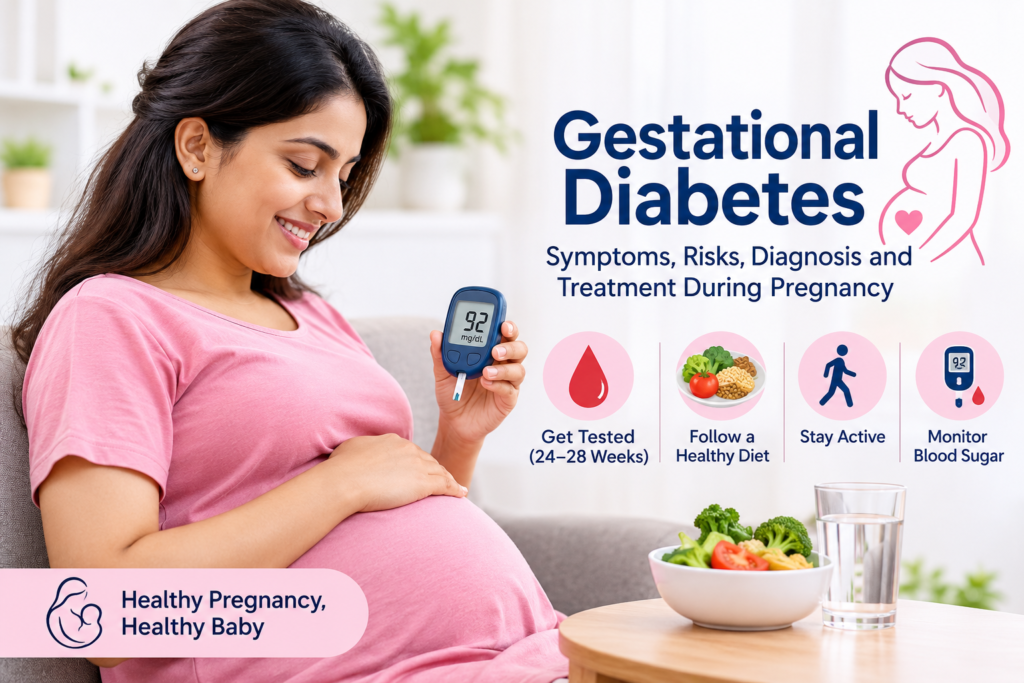
Many women first hear the words gestational diabetes at a routine check-up, often after a blood test around the sixth month of pregnancy. It can feel alarming, but it is common, it is usually picked up through screening rather than symptoms, and with regular follow-up most women go on to have a healthy delivery.
This guide explains what causes it, how the gestational diabetes test works, what the risks are, and how it is managed. If you are looking for pregnancy care in Bhandup, the final sections also cover how to get started.
What Is Gestational Diabetes?
Gestational diabetes is high blood sugar that is first detected during pregnancy in a woman who did not have diabetes before. It usually appears in the second or third trimester and, in most women, settles after delivery.
It is different from type 1 or type 2 diabetes that existed before pregnancy. Blood sugar levels that are already in the diabetes range at the very first antenatal visit are generally treated as pre-existing diabetes, not gestational diabetes.
What Causes Gestational Diabetes?
The main gestational diabetes causes relate to hormones. The placenta produces hormones that help the baby grow, but they also make the body’s cells less responsive to insulin, the hormone that moves sugar from the blood into the cells. This is called insulin resistance, and it increases naturally as pregnancy advances.
Most women’s pancreas simply makes extra insulin to keep up. When it cannot, blood sugar rises. Nothing you did or ate caused this on its own, although weight, family history and age can make it more likely.
What Are the Symptoms of Gestational Diabetes?
Most women have no noticeable gestational diabetes symptoms, which is exactly why screening matters. When symptoms do occur, they can include:
- Increased thirst
- Passing urine more often than usual
- Unusual tiredness
- Blurred vision
- Repeated urinary or vaginal infections
The difficulty is that many of these also occur in a normal pregnancy. Do not self-diagnose. Persistent thirst, very frequent urination or blurred vision should be mentioned to your doctor, but only a blood test can confirm high blood sugar during pregnancy.
Who Is at Risk of Developing Gestational Diabetes?
Anyone can develop it, but the chances are higher if you:
- Are overweight or have a high BMI before pregnancy (the cut-off is lower for South Asian women)
- Are 35 or older
- Have a parent or sibling with type 2 diabetes
- Had gestational diabetes in an earlier pregnancy
- Previously delivered a baby weighing over 4 kg
- Have polycystic ovary syndrome (PCOS)
- Are of South Asian origin, which carries a higher risk of glucose problems
- Have been on long-term steroid medicines
Having risk factors does not mean you will develop it, and many women with none still do. This is why most guidelines, including Indian national guidance, advise testing all pregnant women. A routine visit with your obstetrician and gynaecologist is the best time to discuss your personal risk.
How Is Gestational Diabetes Diagnosed?
Diagnosis is by blood test. In many guidelines, including those of the American Diabetes Association and the American College of Obstetricians and Gynecologists, screening is recommended at 24 to 28 weeks of pregnancy for women not already known to have diabetes.
Earlier testing, even at the first antenatal visit, may be advised if you have risk factors. Indian national guidance generally encourages testing as early as possible and repeating it at 24–28 weeks if the first result is normal. If an early test is normal, it is still repeated later, because insulin resistance keeps rising.
The gestational diabetes test most often used is the oral glucose tolerance test, explained below.
What Is the OGTT Test in Pregnancy?
The OGTT test in pregnancy (oral glucose tolerance test) measures how well your body handles a sugary drink. You drink a measured amount of glucose, and blood samples are taken at set times to see how your blood sugar responds.
Protocols differ slightly between guidelines, so your doctor will tell you which one is followed:
| Approach | How it works | Diagnosis |
| One-step (WHO / IADPSG / ADA) | 75 g glucose after fasting; blood tested fasting, at 1 hour and at 2 hours | Any one value at or above: fasting 92, 1-hour 180, 2-hour 153 mg/dL |
| Two-step (ACOG) | 50 g non-fasting screen; if raised, a fasting 100 g test over 3 hours | Two or more values at or above the set limits |
| Single-step non-fasting (DIPSI, used in India) | 75 g glucose, no fasting needed; one blood test at 2 hours | 2-hour value of 140 mg/dL or higher |
What to expect: the test takes about two to three hours. Follow the preparation instructions you are given, including whether to fast. Sip only water while waiting, and bring something to read. Some women feel nauseous after the drink; tell the staff if you do.
Is it necessary? Yes. Because most women have no symptoms, the OGTT test in pregnancy is the only reliable way to find out, and finding it early gives you time to protect both you and your baby.
How Can Gestational Diabetes Affect Mother and Baby?
When blood sugar is well controlled, most women have a healthy pregnancy and birth. When it is not, there can be risks.
For the baby:
- Growing larger than expected, which can make delivery harder
- Shoulder injury during birth (shoulder dystocia)
- Low blood sugar and jaundice soon after birth
- A higher chance of weight problems and type 2 diabetes later in life
For the mother:
- High blood pressure and pre-eclampsia
- A higher chance of caesarean delivery
- Needing treatment for high blood sugar during pregnancy, sometimes including insulin
- Developing type 2 diabetes in later years
These are possibilities, not certainties. Regular monitoring and treatment lower these risks considerably, though no one can guarantee a particular outcome.
How Is Gestational Diabetes Treated During Pregnancy?
Gestational diabetes treatment is built around a few steps, planned with your doctor:
- Healthy eating, spread across small meals (see the next section).
- Gentle physical activity, such as a walk after meals, if your doctor says it is safe for you.
- Blood sugar monitoring at home.
- Medication if needed. If sugar stays above target despite diet and activity, usually after a week or two, your doctor may prescribe insulin or, in some cases, other medicine. Never start, stop or change medicines on your own.
- Extra checks on the baby, such as growth scans, as advised by your obstetrician.
Many women manage with diet and activity alone. Getting gestational diabetes treatment early and following up regularly gives the best chance of a smooth pregnancy. Timing and mode of delivery depend on your blood sugar control, the baby’s growth and your overall health.
Gestational Diabetes Diet: What Should You Eat?
A good gestational diabetes diet is not about starving or cutting out food groups. The goal is steady blood sugar while the baby still gets the nutrition it needs. General principles include:
- Eat at regular times: three modest meals and two or three small snacks, rather than long gaps.
- Choose slow-release carbohydrates: whole grains such as millets, whole wheat roti, oats and brown rice, and pulses, in controlled portions.
- Add protein and fibre: dal, eggs, paneer, curd, sprouts, vegetables and salads help you stay full.
- Limit quick sugars: sweets, fruit juices, sugary drinks, white bread and fried snacks tend to push sugar up fast.
- Watch portions of fruit: a small serving with a meal usually suits better than a large amount alone.
- Drink water: avoid sweetened drinks.
For example, many women find that pairing a roti with dal and vegetables, rather than eating rice alone, keeps their readings steadier. Responses differ from person to person, so ask your doctor or a registered dietitian for a plan based on your readings, weight and any other conditions. Do not follow strict diets or skip meals on your own.
How to Monitor Blood Sugar During Pregnancy
Your doctor may ask you to check your blood sugar at home with a glucometer, usually fasting in the morning and 1 or 2 hours after meals. Commonly used targets are:
| Time of check | Common target (mg/dL) |
| Fasting | Below 95 |
| 1 hour after a meal | Below 140 |
| 2 hours after a meal | Below 120 |
Your own targets may differ, so follow your doctor’s advice. Keep a simple diary of readings, meals and walks, and bring it to every visit. Call your doctor promptly if readings stay above target, if you feel very thirsty, unwell or dizzy, or if the baby’s movements seem reduced.
What Happens After Delivery?
For most women, blood sugar returns to normal soon after the baby is born, and medicines are usually stopped. Your sugar and your baby’s sugar may be checked in the first hours or days.
However, having had gestational diabetes means a higher chance of type 2 diabetes later. This is why a follow-up glucose test is important, even if you feel completely well:
- A 75 g OGTT at 4 to 12 weeks after delivery, to check for persisting diabetes or prediabetes.
- If normal, repeat testing every 1 to 3 years for life, as advised by your doctor.
- Breastfeeding, regular activity and keeping a healthy weight all help lower your future risk.
- Tell your doctor about this history before any future pregnancy, as it often returns.
Gestational Diabetes Care at Navkaar Hospitals
Navkaar Hospitals offers pregnancy care in Bhandup through its gynaecology and obstetrics department. If you are looking for a gestational diabetes specialist in Mumbai, our team can guide you on screening, monitoring and follow-up during and after pregnancy. Please call the hospital to confirm which tests and services are currently available.
If you are pregnant, planning a pregnancy or have been told your sugar is high, you can book an appointment with a gynaecologist to discuss your screening schedule.
Frequently Asked Questions
What are the early symptoms of gestational diabetes?
Most women have none. Possible early gestational diabetes symptoms include more thirst, frequent urination, tiredness and blurred vision, but these overlap with normal pregnancy. Testing is the only way to know.
When should gestational diabetes testing be done?
Most guidelines recommend a gestational diabetes test at 24 to 28 weeks. If you have risk factors, your doctor may test earlier, even at your first antenatal visit, and repeat it later if the first result is normal.
Is the OGTT test necessary during pregnancy?
Yes. The OGTT test in pregnancy detects gestational diabetes in women who feel perfectly well. Your doctor will explain which version of the test is suitable for you.
Can gestational diabetes affect the baby?
It can, mainly if blood sugar stays high. Possible effects include a larger baby, birth difficulties and low blood sugar after birth. Good control lowers these risks.
What foods should be avoided with gestational diabetes?
Most women are advised to limit sweets, sugary drinks, fruit juices, refined flour products and fried snacks. A balanced gestational diabetes diet should be personalised by your doctor or dietitian.
Does gestational diabetes go away after delivery?
Usually yes, blood sugar returns to normal soon after birth. But the risk of type 2 diabetes remains higher, so follow-up testing is advised.
Can gestational diabetes develop without symptoms?
Yes, and this is the most common situation. High blood sugar during pregnancy can be completely silent, which is why routine screening is recommended.
Why is blood sugar testing important after childbirth?
It shows whether your sugar has fully returned to normal or whether diabetes or prediabetes persists. Finding it early allows lifestyle changes or treatment before complications develop.