Most people in India use heart attack and cardiac arrest as if they mean the same thing. They do not. Both will land you in the ICU. But what goes wrong inside the body, what you see on the outside, and what you need to do in the next 60 seconds are all completely different.
More than 60% of Indians cannot explain the difference between heart attack and cardiac arrest, even after reading about it. That gap matters. Every year, thousands of people in Mumbai and across India lose their lives or suffer permanent damage because the people around them did not know what was happening or what to do first.
This blog explains both conditions plainly. Symptoms, causes, what to do on the spot, heart attack treatment, cardiac arrest treatment, and when to get to a hospital. Read it once. It is the kind of thing worth knowing before you need it.
Heart attack vs cardiac arrest: the core difference
A heart attack is a plumbing problem. A cardiac arrest is an electrical problem. That one sentence is the whole story, but it helps to understand what those words actually mean inside the body.
What is a heart attack?
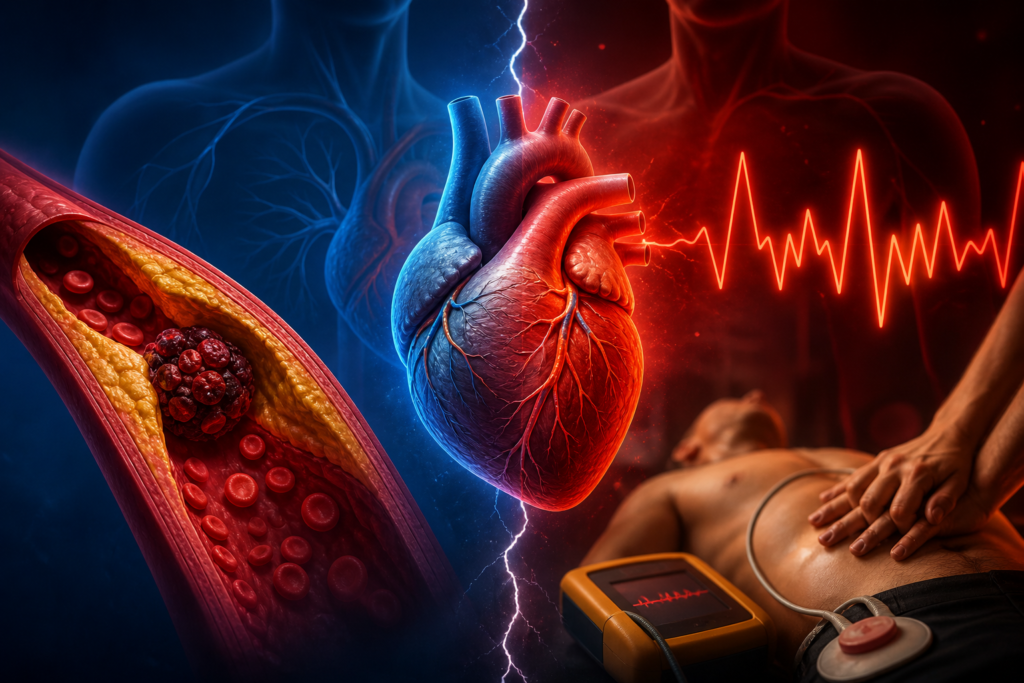
The heart needs a constant supply of oxygen-rich blood to keep working. That blood travels through the coronary arteries. Over time, fatty deposits called plaque build up along the inner walls of these arteries. When a piece of plaque cracks or ruptures, the body’s clotting response kicks in and a blood clot forms right on top of it. That clot can block the artery completely.
When that happens, the section of heart muscle fed by that artery stops getting oxygen. It starts to die. The heart is still beating. The person is usually still conscious. But damage is accumulating with every passing minute.
That is a heart attack, medically known as a myocardial infarction (MI).
What is a cardiac arrest?
The heart beats because of electrical signals that fire in a precise sequence. When that electrical system breaks down, the heart can go into a chaotic, disorganised rhythm called ventricular fibrillation. Instead of pumping blood, it just quivers. No blood moves. No oxygen reaches the brain.
Within seconds, the person collapses. They stop breathing normally. There is no pulse. Without immediate help, brain damage begins in about 4 minutes and death follows shortly after.
That is cardiac arrest, also called sudden cardiac arrest.
Why this confusion is dangerous
People often treat cardiac arrest vs heart attack as the same emergency and respond the same way to both. They might sit the person down and call an ambulance when what the person actually needs is CPR right now. That delay can be fatal. Knowing which is which changes everything about how you respond.
Heart attack symptoms
Heart attack symptoms can start suddenly or creep up slowly over hours or even days. The heart is still beating, so the person is conscious and can usually describe what they feel.
Chest pain or pressure is the most common sign. It typically feels like squeezing, heaviness, or something pressing down on the chest. It often spreads outward to the left arm, shoulder, jaw, neck, or upper back. Some people feel it on both sides. Some feel it only in the jaw or arm and not in the chest at all.
Shortness of breath that comes on without physical effort. Cold sweating that appears suddenly and without reason. Nausea, vomiting, or a general unsettled stomach feeling. Unusual tiredness that feels disproportionate to what the person has been doing. Dizziness or a sense of feeling faint.
Women are more likely than men to have atypical symptoms. A woman having a heart attack might feel only extreme fatigue, mild jaw discomfort, or a vague sense that something is wrong. Because these symptoms do not look dramatic, they are often dismissed as stress, indigestion, or anxiety. That dismissal costs lives.
A heart attack with no obvious symptoms also exists. It is called a silent heart attack and shows up only later on an ECG or blood test. People who have diabetes are at higher risk of this because nerve damage can blunt pain signals.
The pattern that matters most: heart attack symptoms tend to build. They do not disappear on their own. If chest discomfort lasts more than a few minutes, do not observe it. Act.
Cardiac arrest symptoms
Cardiac arrest usually gives no warning. One moment the person is standing, sitting, or talking. The next moment they collapse.
In some cases, people report feeling heart palpitations, dizziness, or chest discomfort in the minutes or hours before sudden cardiac arrest. But for many people, there are no signs at all.
What you see when cardiac arrest happens: the person collapses suddenly and does not respond when you call their name or shake their shoulder. They are not breathing normally, or they are making a gasping or snoring sound. There is no detectable pulse.
Do not wait to confirm. If someone collapses and is unresponsive, treat it as sudden cardiac arrest immediately. Every second of delay reduces their chance of survival.
Causes of a heart attack
Most heart attacks come down to coronary artery disease, which is a buildup of plaque in the arteries over years or decades. By the time a heart attack happens, the artery has usually been narrowing for a long time. The clot that causes the final blockage can form quickly, but the conditions for it were building for years.
Risk factors that drive this process include:
High LDL cholesterol, which contributes directly to plaque formation. High blood pressure (hypertension), which damages artery walls and makes them more prone to plaque. Smoking, which damages blood vessels and accelerates artery narrowing. Type 2 diabetes, which raises cardiovascular risk significantly. Obesity, especially abdominal fat, which is linked to inflammation and insulin resistance. Physical inactivity over long periods. Chronic stress, which raises cortisol levels and raises blood pressure over time. Family history of heart disease, which indicates inherited risk that cannot be changed but can be managed.
In India, many of these risk factors are appearing earlier in life. Indians are genetically more prone to abdominal fat and insulin resistance at lower body weight than many other populations. This is one reason heart disease strikes Indians at younger ages than in Western countries.
Less common causes of heart attack
A spontaneous coronary artery dissection (SCAD), which is a tear in the artery wall, can cause a heart attack without any plaque buildup. This is more common in younger women and people without typical risk factors. Severe coronary artery spasm can also temporarily cut off blood flow and trigger a heart attack. Drug use, particularly cocaine and amphetamines, can cause coronary artery spasm even in young people with no prior heart disease.
Causes of cardiac arrest
Cardiac arrest most often happens because of a dangerous heart rhythm problem called ventricular fibrillation (VF). The heart’s electrical system goes into a chaotic pattern. The heart quivers instead of pumping.
What triggers VF? A heart attack is the most common cause. When heart muscle is damaged by a blockage, it can become electrically unstable and tip into VF. This is why an untreated heart attack often leads to cardiac arrest.
But cardiac arrest also happens in people who did not know they had any heart problem. Other causes include:
Hypertrophic cardiomyopathy (HCM), a thickening of the heart muscle that is often inherited and can affect young athletes with no prior symptoms. Arrhythmias like ventricular tachycardia (V-tach) or long QT syndrome, both of which can cause the heart to spiral into a deadly rhythm. Brugada syndrome, a genetic electrical disorder more common in South and Southeast Asian men. Myocarditis, inflammation of the heart muscle often triggered by a viral infection. Severe electrolyte imbalances, particularly low potassium or magnesium, which disrupt the electrical system. Commotio cordis, a rare event where a physical blow to the chest at exactly the wrong moment in the heart’s cycle triggers cardiac arrest. Extreme physical exertion in someone with an underlying undiagnosed heart condition.
This is part of why sudden cardiac arrest is so frightening. It does not require an obvious build-up. Fit young people, athletes, and people who had a medical check recently can still experience it.
Emergency first aid: what to do right now
If someone is having a heart attack
Make them stop whatever they are doing and sit or lie down in a comfortable position. Loosen any tight clothing around the neck and chest. Call 108 immediately. Do not drive to the hospital yourself. The ambulance has equipment and trained staff that can help on the way.
If the person is not allergic to aspirin and there is one available, have them chew it (not swallow whole). Aspirin helps slow the clotting process. This is not a substitute for getting to hospital fast. It is a small thing you can do while waiting.
Keep the person calm and still. Anxiety raises heart rate and increases the heart’s oxygen demand, which is the opposite of what you want right now.
If someone is in cardiac arrest
The first 10 minutes determine everything.
Call 108 the second you recognise what is happening. Do not leave the person to go find a phone. Shout for someone else to call while you start CPR.
Start chest compressions immediately. Place the heel of your hand on the centre of the chest, put your other hand on top, and push down hard and fast. Aim for 100 to 120 compressions per minute. Push down at least 5 cm (about 2 inches) each time. Let the chest rise fully between compressions. Do not stop.
If an AED (automated external defibrillator) is available, use it as soon as possible. AEDs are now placed in many Mumbai airports, railway stations, shopping malls, gyms, and large office buildings. They give voice instructions and are designed for use by anyone. You cannot make the wrong call by using one. The device checks the heart rhythm first and will only deliver a shock if it is needed.
If two people are present, one does compressions while the other calls 108 and finds an AED.
Keep going until paramedics arrive. Fatigue is real but stopping CPR removes the only thing keeping blood reaching the brain. Even imperfect CPR is far better than none.
Bystander CPR before an ambulance arrives can double or triple survival rates in sudden cardiac arrest. The people around a patient in the first minutes matter as much as the hospital.
The link between heart attack and cardiac arrest
A heart attack can cause cardiac arrest. When part of the heart muscle dies from a blocked artery, the electrical signals in that damaged area become unstable. This instability can trigger ventricular fibrillation and cardiac arrest. This is why treating a heart attack quickly also reduces the risk of cardiac arrest following it.
But cardiac arrest is not always caused by a heart attack. Many cases happen in people with no blockage in their arteries at all. The cause is purely electrical.
The practical way to tell them apart in an emergency: if the person is conscious and responsive, even if in pain, it is more likely a heart attack. If the person has collapsed and is completely unresponsive with no normal breathing and no pulse, it is sudden cardiac arrest. The latter needs CPR. Right now.
Why young Indians are having heart emergencies earlier
This is worth addressing clearly because it surprises people who assume heart disease is a problem that arrives at 60 or 65.
According to the Indian Heart Association, 50% of all heart attacks in Indian men happen before the age of 50. Around 25% happen before 40. Indians develop heart disease nearly a decade earlier than people in most Western populations. Sudden cardiac death accounts for close to 10% of all deaths in India, and a significant proportion of those deaths happen in people who thought they were healthy.
What is driving this? Genetics play a role. Indians are more prone to insulin resistance and abdominal obesity at lower body weights than other ethnic groups, which creates a higher baseline cardiovascular risk. On top of that, urban lifestyles in cities like Mumbai have pushed people toward sedentary work, long commutes, late eating, poor sleep, and chronic stress. These factors compound each other.
Energy drinks and stimulants have also been linked to cardiac arrest in young adults with undiagnosed arrhythmias. Substance use, including cocaine and recreational drugs, is another contributing factor. The point is that younger and younger people are experiencing conditions that previously showed up only in their parents’ generation.
None of this is meant to alarm. It is meant to push people toward action while they still have the option of prevention rather than treatment. Demand for cardiology treatment in Mumbai is rising because more people need it, and at younger ages.
If diabetes is part of the picture for you or your family, our diabetes clinic in Bhandup also offers integrated cardiac risk assessment, since uncontrolled diabetes is one of the leading drivers of early heart disease in India.
How doctors diagnose each condition
Diagnosing a heart attack
In hospital, the emergency team runs a 12-lead ECG within 10 minutes of arrival to look for characteristic changes in the heart’s electrical tracing. Blood tests for cardiac troponin, a protein released into the bloodstream when heart muscle cells are damaged, confirm the diagnosis. A coronary angiography shows exactly where the blockage is and how severe it is.
Diagnosing cardiac arrest
Cardiac arrest is usually diagnosed at the scene by the absence of pulse and normal breathing. Once a patient is resuscitated and reaches hospital, the team runs continuous ECG monitoring, an echocardiogram to assess how well the heart is pumping, blood tests to check for electrolyte problems or enzyme markers, and coronary angiography to check whether a heart attack triggered the arrest.
Getting this right matters for the ongoing treatment plan. A patient who survived cardiac arrest caused by a blocked artery needs the same artery-opening treatment as a heart attack patient, plus the investigation and management of the underlying electrical instability to prevent it happening again.
Heart attack treatment
Heart attack treatment in a well-equipped hospital moves fast. The goal is to open the blocked artery as quickly as possible and save as much heart muscle as possible.
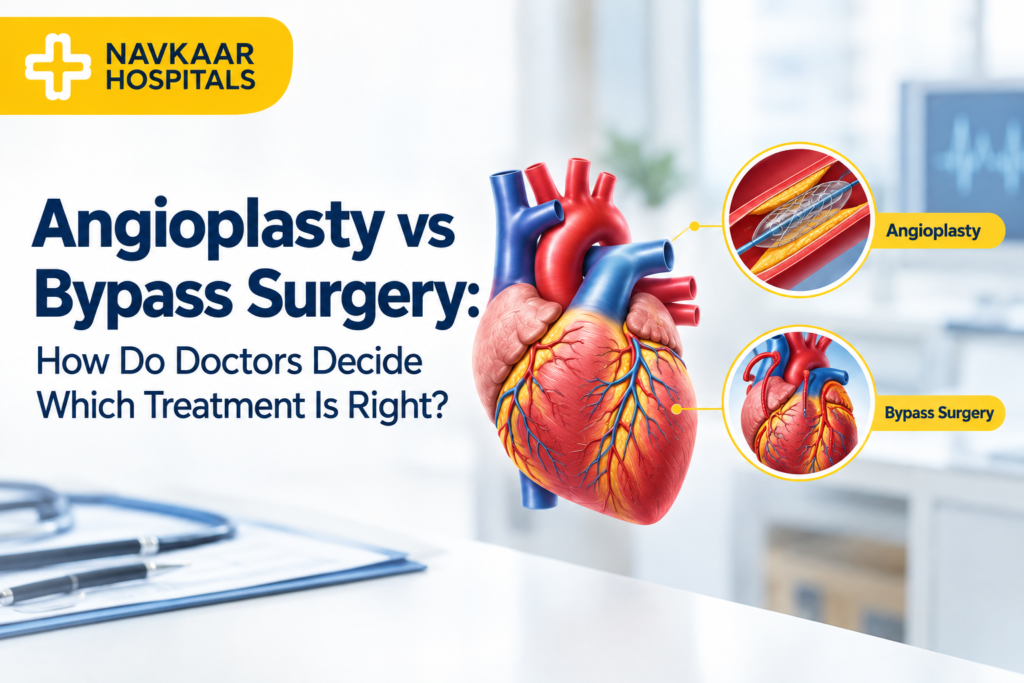
Coronary angioplasty with stenting is the preferred approach when the hospital has a catheterisation lab available. A thin catheter is threaded through an artery in the wrist or groin up to the blocked coronary artery. A balloon on the tip is inflated to push the blockage open. A small metal mesh tube (stent) is placed to keep the artery open permanently. When done within the first 90 minutes of symptom onset, this procedure can restore normal blood flow and prevent significant heart damage.
Thrombolysis uses clot-dissolving medication given through an IV drip. It is used when angioplasty is not immediately available. It is less precise than angioplasty but can be lifesaving when given quickly.
Coronary artery bypass grafting (CABG) is a surgical option for patients with multiple severe blockages. A new route for blood flow is created using a blood vessel taken from the chest wall or leg. This is a planned surgical procedure rather than an emergency one in most cases.
Medications used in heart attack treatment include aspirin and other antiplatelet agents to prevent further clotting, beta-blockers to reduce the heart’s workload, statins to stabilise plaque, ACE inhibitors to protect heart function, and anticoagulants to prevent new clots forming.
After the acute phase, heart attack treatment continues with cardiac rehabilitation, which includes supervised exercise, diet counselling, medication management, and stress reduction. This phase is often underestimated but it significantly reduces the risk of a second heart attack.
For anyone in Mumbai, finding heart attack treatment in Mumbai at a hospital with a 24/7 catheterisation lab is the priority. The difference between treatment at 1 hour and treatment at 4 hours is the difference between full recovery and permanent heart damage.
For complex cases involving multiple blockages, our cardio-thoracic and vascular surgery team provides surgical options including coronary artery bypass grafting (CABG) for patients who need a more extensive intervention.
Cardiac arrest treatment
Cardiac arrest treatment starts before the ambulance arrives, with whoever is standing next to the patient.
CPR is the first treatment. It keeps blood moving to the brain and heart until the heart can be restarted. Without it, the heart and brain deteriorate with every passing minute.
Defibrillation is what restarts the heart. The electric shock delivered by an AED or by hospital equipment momentarily stops the chaotic electrical activity in the heart, giving the heart’s own natural pacemaker a chance to restart in a normal rhythm. For every minute that passes without defibrillation during ventricular fibrillation, survival chance drops by around 10%.
In hospital, cardiac arrest treatment includes IV adrenaline and antiarrhythmic medications to support the heart’s rhythm, airway management and ventilation, cardiac ICU monitoring and care, targeted temperature management in some cases to protect brain function after resuscitation, and full investigation to find and treat whatever caused the arrest.
Experienced cardiac arrest treatment doctors in Mumbai at specialised centres also evaluate whether an implantable cardioverter defibrillator (ICD) should be fitted after the patient stabilises. An ICD sits under the skin and monitors the heart rhythm continuously. If it detects a dangerous rhythm, it delivers an automatic shock before the person even loses consciousness.
Cardiac arrest treatment in Mumbai at a centre with full cardiac ICU capability and experienced cardiologists gives patients the best chance of both surviving and recovering with minimal brain damage.
When to get to a hospital immediately
Some symptoms should never be watched and waited on. Get to emergency care without delay for:
Chest pain or tightness lasting more than a few minutes, or chest pain that goes away and then comes back. Pain spreading to the left arm, jaw, neck, shoulder, or upper back. Sudden shortness of breath with no obvious physical cause. Cold sweating that appears without exertion or heat. Feeling faint, very dizzy, or actually fainting. A racing, pounding, or very irregular heartbeat that comes on suddenly. Someone collapsing and becoming completely unresponsive.
Do not diagnose yourself or wait for the symptoms to pass. Do not drive yourself to hospital. Call 108. In Mumbai’s traffic conditions, an ambulance with a trained crew is almost always faster and safer than trying to get there alone.
Prevention: what actually works
Both heart attack and cardiac arrest share risk factors that are modifiable. Managing them reduces risk for both.
Get a proper cardiac health check. Blood pressure, HbA1c, fasting cholesterol panel, and a resting ECG are the basics. Many people in Mumbai have never had these done and would not know if something was wrong. If you have diabetes or a family history of heart disease, ask for a cardiac risk assessment specifically.
Move more. Thirty minutes of moderate physical activity on most days protects the heart in multiple ways: lower blood pressure, better cholesterol profile, reduced insulin resistance, lower resting heart rate. A walk works. A cycle works. It does not require a gym.
Stop smoking. No level of smoking is safe for the cardiovascular system. Even passive smoking raises cardiac risk.
Watch what you eat most of the time. The urban Mumbai diet is increasingly heavy in refined carbohydrates, processed snacks, trans fats, and excess sodium. Shifting toward more vegetables, whole grains, pulses, and unsaturated fats reduces arterial inflammation and cholesterol over time.
Sleep properly. Seven to eight hours of quality sleep is not optional for cardiovascular health. Chronic sleep deprivation raises blood pressure, increases cortisol, and raises the risk of arrhythmia.
Manage ongoing stress. This is harder to prescribe than a pill but just as important. Chronic psychological stress raises blood pressure, promotes inflammation, and in some people can directly trigger a cardiac event.
Know your family history. If a parent or sibling had a heart attack before 50 or experienced sudden cardiac arrest, tell your doctor. Some of the inherited conditions that cause sudden cardiac arrest like hypertrophic cardiomyopathy and long QT syndrome can be identified through testing and managed with medication or devices before they cause harm.
Learn hands-only CPR. A 60-minute training session can make you the most important person in the room when someone’s heart stops. Hands-only CPR (chest compressions without mouth-to-mouth) is effective and does not require any certification to do. You can start right now if you need to.
Related conditions worth knowing
Heart failure is when the heart muscle becomes too weak to pump blood efficiently. It is a chronic, ongoing condition. It can develop as a long-term consequence of a heart attack that was not fully treated, but it is different from both a heart attack and cardiac arrest. People with heart failure often live with breathlessness, fatigue, and fluid retention for years.
Angina is chest pain caused by reduced blood flow to the heart, usually during physical exertion. It is different from a heart attack because the blockage is partial rather than complete and blood flow is not fully cut off. But angina is a clear sign that coronary artery disease is present and that heart attack risk is elevated. It should not be ignored.
Arrhythmia is any irregular heart rhythm. Some arrhythmias are benign. Others, particularly ventricular fibrillation and ventricular tachycardia, are direct causes of sudden cardiac arrest. People who have been told they have an arrhythmia should be under regular cardiology care.
Coronary artery disease (CAD) is the underlying condition behind most heart attacks. It develops over years and typically produces no symptoms until a blockage is significant. Diagnosis requires a stress test, CT coronary angiography, or invasive angiography.
Heart attack vs cardiac arrest: quick comparison
| Heart attack | Cardiac arrest | |
| What goes wrong | Blocked blood supply to heart muscle | Heart stops beating entirely |
| Type of problem | Circulation | Electrical |
| Is person conscious? | Usually yes | No, collapses immediately |
| Heart still beating? | Yes | No |
| Warning signs | Often builds over minutes or hours | Usually sudden, little to no warning |
| First step | Call 108, rest, chew aspirin if available | Call 108, start CPR right away |
| Hospital treatment | Angioplasty, thrombolysis, CABG, medication | Defibrillation, CPR, cardiac ICU, ICD evaluation |
Expert cardiac care in Mumbai
For both emergency response and planned cardiology treatment in Mumbai, the hospital you reach matters.
Navkaar Hospitals in Bhandup, Mumbai, offers 24/7 emergency cardiac care with experienced cardiologists, advanced cardiac monitoring, and the critical care capabilities needed for both heart attack treatment in Mumbai and cardiac arrest emergency treatment in Mumbai. The team handles everything from emergency resuscitation to post-event cardiac rehabilitation and long-term cardiac risk management.
If you are looking for the best heart specialists in Mumbai or the best heart surgeon in Mumbai for a planned consultation or a cardiac risk review, Navkaar Hospitals is available around the clock.
Navkaar Hospitals, Bhandup, Mumbai | 24/7 cardiac emergency care
Conclusion
The difference between heart attack and cardiac arrest is something every adult should understand. A heart attack is a blockage. Cardiac arrest is an electrical failure. Both are serious. But cardiac arrest kills within minutes without immediate CPR, while a heart attack gives a window of time that determines how much damage occurs.
If you or someone around you shows warning signs, do not observe and wait. Get to a hospital offering heart attack treatment in Mumbai or cardiac arrest treatment in Mumbai immediately. Call 108. Start CPR if the person is unresponsive. And if you have not had a cardiac check recently and you have risk factors, book one before you need emergency care.