If your periods are irregular, your weight keeps going up despite eating carefully, or you have been struggling to get pregnant, you are not imagining things. These are not random problems. They could be connected, and the connection might be PCOS.
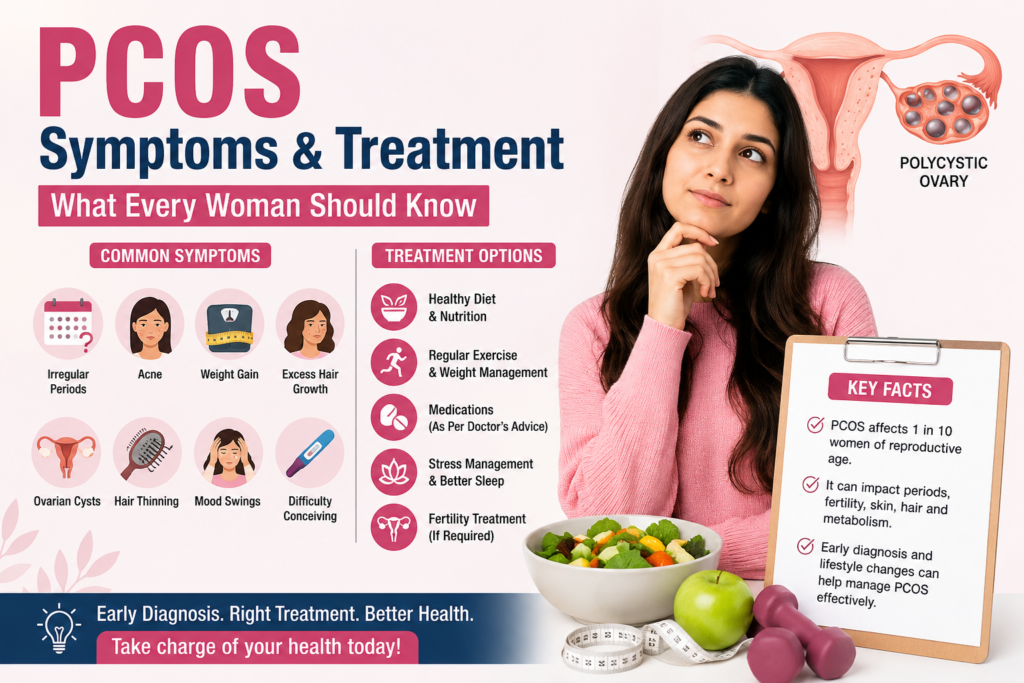
PCOS, or Polycystic Ovary Syndrome, affects roughly 1 in 10 women of reproductive age in India. Many women go years without a proper diagnosis, cycling through dermatologists for acne and dietitians for weight, never realizing one hormonal condition is driving everything. This blog is for them.
We are going to walk through what PCOS actually is, how to recognize it, how doctors diagnose it, what treatment looks like, and when to seek help. No jargon, no fluff. Just the information you need.
What Is PCOS?
Let us start with the basics. PCOS (Polycystic Ovary Syndrome) is a hormonal condition that affects how a woman’s ovaries work. The name comes from the small fluid-filled sacs (follicles) that collect on the outer edge of the ovaries in many women with this condition. But the word ‘polycystic’ is a bit misleading because not all women with PCOS develop visible cysts, and not all cysts mean PCOS.
The real issue is hormonal imbalance. In women with PCOS, the body often produces higher-than-normal levels of androgens, which are hormones typically thought of as male hormones but present in women too. This excess disrupts ovulation, the monthly cycle where the ovary releases an egg.
When ovulation does not happen regularly, eggs are not released, periods become unpredictable, and the lining of the uterus does not shed the way it should. Over time, this affects fertility, metabolism, skin, hair, and emotional health.
One clarification that comes up often: PCOS and PCOD are not the same thing. PCOD (Polycystic Ovarian Disease) refers specifically to the presence of multiple cysts in the ovaries. PCOS is a broader syndrome that involves hormonal imbalance with or without cysts. All PCOS patients may have PCOD features, but not all PCOD cases meet the criteria for PCOS.
PCOS Causes: Why Does It Happen?
There is no single cause of PCOS. It tends to result from a combination of factors that interact in ways that are still being studied.
Insulin Resistance
This is probably the most significant driver. When cells stop responding properly to insulin, the pancreas compensates by producing more of it. High insulin levels then stimulate the ovaries to produce more androgens. Many women with PCOS have insulin resistance even if they are not overweight or diabetic, which is why it often goes undetected.
Hormonal Imbalance
PCOS disrupts the balance between LH (luteinizing hormone) and FSH (follicle-stimulating hormone). In a typical cycle, FSH encourages egg maturation and LH triggers ovulation. When LH is elevated relative to FSH, as it often is in PCOS, ovulation stalls and androgens rise.
Genetics and Family History
PCOS runs in families. If your mother, sister, or maternal aunt has irregular periods, excess hair growth, or was diagnosed with PCOS or type 2 diabetes, your risk is meaningfully higher. The condition can be passed down from either parent’s side.
Inflammation
Women with PCOS often show signs of low-grade chronic inflammation. This inflammation can stimulate androgen production and contribute to insulin resistance, creating a cycle that worsens symptoms over time.
Lifestyle Factors
Sedentary habits, high sugar intake, poor sleep, and stress do not cause PCOS on their own, but they can trigger or worsen it in women who are already predisposed. Stress, specifically, raises cortisol levels, which interacts with insulin and hormone regulation.
PCOS Symptoms: What to Watch For
PCOS symptoms vary a lot from woman to woman, which is part of why it gets missed. Some women have many obvious signs; others have just one or two subtle ones.
Irregular or Missed Periods
This is the most common symptom. Your cycle might be longer than 35 days, shorter than 21 days, or completely absent for months. Some women have very heavy periods when they do occur. Others experience spotting between cycles.
Excess Androgen Effects
High androgen levels show up on your body in specific ways:
- Unwanted hair growth on the face, chin, chest, stomach, or back (this is called hirsutism)
- Acne on the face, chest, or back that does not respond well to standard treatments
- Thinning hair on the scalp, sometimes in a pattern similar to male-pattern baldness
- Oily skin
Weight Gain and Difficulty Losing Weight
Many women with PCOS gain weight, especially around the abdomen, and find it very difficult to lose even with diet and exercise. This happens because of insulin resistance. The body is storing fat rather than burning it, regardless of caloric intake. Not all women with PCOS are overweight, but those who are tend to have more severe symptoms.
Difficulty Conceiving
Because PCOS disrupts ovulation, it is one of the leading causes of female infertility. A woman with irregular ovulation has fewer windows each year for conception. This does not mean pregnancy is impossible. With the right treatment, many women with PCOS conceive naturally or with mild assistance.
Darkening of Skin
Dark, velvety patches of skin, usually around the neck, groin, armpits, or under the breasts, are called acanthosis nigricans. They are a skin response to high insulin levels and appear fairly commonly in women with PCOS who have insulin resistance.
Mood Changes and Mental Health Impact
Depression, anxiety, and mood swings are more common in women with PCOS than in the general population. This is partly hormonal (androgens and insulin affect neurotransmitters) and partly psychological (living with acne, hair growth, weight issues, and fertility concerns takes a toll).
Pelvic Pain
Some women experience dull or sharp pain in the lower abdomen or pelvis. This can come from cysts, though not all PCOS-related pelvic discomfort is cyst-related.
How Is PCOS Diagnosed?
There is no single test that confirms PCOS. Diagnosis is based on a combination of criteria, history, and ruling out other conditions that can look similar.
Most gynecologists and endocrinologists use what is called the Rotterdam Criteria. Under these guidelines, a woman is diagnosed with PCOS if she has at least two of the following three features:
- Irregular or absent ovulation (usually seen as irregular or missing periods)
- Clinical or biochemical signs of excess androgens (hirsutism, acne, or elevated androgen levels on blood tests)
- Polycystic ovaries on ultrasound (12 or more follicles in either ovary, or enlarged ovary volume)
Diagnostic Tests Your Doctor Will Likely Order
- Blood tests: These check your hormone levels including LH, FSH, testosterone, DHEA-S, prolactin, and thyroid hormones. They also test for insulin resistance and glucose tolerance, and may include a fasting lipid panel to check cholesterol
- Pelvic ultrasound: This looks at the ovaries for cysts and checks the uterine lining. It is usually done via the abdomen or transvaginally for better detail
- Physical examination: Your doctor will look for signs of androgen excess such as acne distribution, hair pattern, and skin changes
- BMI and blood pressure measurement: Both are relevant because metabolic syndrome and cardiovascular risk go up with PCOS
Your doctor will also rule out other conditions that share symptoms with PCOS, including thyroid disorders, hyperprolactinemia, congenital adrenal hyperplasia, and Cushing’s syndrome. This step matters. Many women are incorrectly treated for years because one of these alternatives was not checked.
PCOS Treatment: What Are Your Options?
There is no permanent cure for PCOS, but it is very much manageable. PCOS treatment is usually tailored to what is bothering you most, whether that is irregular periods, fertility, acne, weight, or long-term health risk. Here is what treatment typically involves.
Lifestyle Changes (First and Most Important)
Before any medication, doctors almost always recommend lifestyle modification. This is not dismissive advice. Research consistently shows that losing even 5 to 10 percent of body weight improves menstrual regularity, reduces androgen levels, and improves insulin sensitivity in women with PCOS.
- Diet: A low glycemic index (low GI) diet reduces insulin spikes. This means choosing whole grains over refined ones, including plenty of vegetables and lean protein, limiting sugar, and avoiding processed foods. Anti-inflammatory foods like berries, leafy greens, fatty fish, and olive oil are particularly helpful
- Exercise: A combination of strength training and moderate cardio, roughly 150 minutes a week, improves insulin sensitivity significantly. Even 30 minutes of brisk walking daily makes a measurable difference
- Sleep: Poor sleep worsens insulin resistance and raises cortisol. Women with PCOS already have disrupted cortisol patterns, so consistent sleep hygiene is therapeutic, not just comfortable
- Stress management: Yoga, meditation, and breathwork reduce cortisol and have been shown to improve menstrual regularity in PCOS patients specifically
Medications for Irregular Periods
- Oral contraceptive pills (OCPs): For women who are not trying to conceive, the combined pill is often the first medical treatment. It regulates the menstrual cycle, reduces androgen levels, and over time improves acne and hair growth. Different formulations work better for different women, so this sometimes takes trial and adjustment
- Progestin therapy: For women who cannot take estrogen-containing pills, progestin alone taken for 10 to 14 days can trigger a period and protect the uterine lining
Medications for Insulin Resistance
- Metformin: This diabetes medication is widely used in PCOS even when blood sugar is normal. It improves insulin sensitivity, helps with weight management, restores ovulation in some women, and reduces androgen production. It is often prescribed alongside lifestyle changes
Treatment for Fertility and Ovulation
For women who want to conceive, treatment focuses on stimulating ovulation:
- Letrozole: Now considered the first-line ovulation induction medication for PCOS. It is more effective than clomiphene for this population
- Clomiphene citrate: An older option that still works well for many women
- Gonadotropins: Injectable hormones used when oral medications do not work
- Laparoscopic ovarian drilling (LOD): A minor surgical procedure where small punctures are made in the ovary using heat or laser. This temporarily lowers androgen production and can restore normal ovulation in selected cases
- IVF (In Vitro Fertilization): Recommended when other approaches fail. Women with PCOS respond well to IVF but do require careful monitoring to avoid ovarian hyperstimulation
Treatment for Acne and Excess Hair
- Anti-androgen medications: Spironolactone is the most commonly used. It blocks androgen receptors and reduces acne, oiliness, and hair growth over several months
- Topical treatments: Retinoids, azelaic acid, and clindamycin for acne. Eflornithine cream can slow facial hair growth
- Hair removal methods: Laser hair removal and electrolysis are effective long-term options once androgen levels are being medically controlled
Long-term Health Monitoring
PCOS is not just a reproductive issue. Women with PCOS have a higher lifetime risk of type 2 diabetes, high blood pressure, high cholesterol, and endometrial cancer (due to irregular shedding of the uterine lining). Regular monitoring matters:
- Annual fasting glucose and HbA1c
- Lipid profile every 2 to 3 years
- Blood pressure checks at every visit
- Endometrial assessment if periods are absent for extended periods
PCOS in Different Life Stages
Adolescents
Diagnosing PCOS in teenagers is tricky because irregular periods are common in the first few years after menstruation begins. Doctors usually wait until at least 2 years after the first period before confirming a PCOS diagnosis. However, girls with significant acne, rapid weight gain, or a strong family history should be evaluated.
Women in Their 20s and 30s
This is when PCOS tends to become most visible, often triggered by coming off the pill, trying to conceive, or significant lifestyle stress. Fertility concerns are central for many women in this age group, and treatment decisions often revolve around whether pregnancy is desired in the near term.
Women in Their 40s and Beyond
PCOS symptoms sometimes improve as women approach perimenopause because androgen levels naturally decline with age. However, the metabolic risks, particularly diabetes and heart disease, do not diminish. Women who had PCOS in their younger years need ongoing monitoring even if their periods have stabilized.
PCOS and Mental Health: The Part That Often Goes Unspoken
Nobody talks about this part enough. When you are dealing with facial hair, acne, unexpected weight gain, and the fear that you may not be able to have children, it does not just affect your body. It changes how you walk into a room. How you feel getting dressed in the morning. How much you share with the people closest to you. These are real struggles, and they deserve real attention.
Studies show that women with PCOS have significantly higher rates of depression and anxiety compared to the general population. This is partly hormonal, androgens and cortisol both affect mood, and partly situational. The condition feels out of control, unpredictable, and invisible to most people around you.
If you are struggling emotionally alongside the physical symptoms, that is worth discussing with your doctor. Some women benefit from counseling alongside medical treatment. Some find that getting a proper diagnosis and a treatment plan brings meaningful relief on its own, simply because the uncertainty ends.
When Should You See a Doctor?
You do not need to wait until things get bad. See a gynecologist if:
- Your periods are regularly more than 35 days apart or fewer than 21 days apart
- You have not had a period in 3 or more months and are not pregnant
- You are experiencing unusual hair growth on the face, chest, or back
- You have been trying to conceive for 6 months (under 35 years old) or 3 months (over 35 years old) without success
- Your acne is severe, persistent, and not responding to topical treatments
- You are gaining weight quickly without a change in diet or exercise
- You have a close family member with PCOS, type 2 diabetes, or early heart disease
Early evaluation leads to earlier treatment, and earlier treatment makes a real difference to your quality of life and long-term health.
Frequently Asked Questions About PCOS
Can PCOS be cured permanently?
PCOS cannot be cured in the traditional sense, but it can be managed very effectively. Many women with PCOS live with minimal symptoms when they maintain lifestyle habits and follow their treatment plan. The condition does tend to evolve over time, sometimes improving on its own after the reproductive years.
Can a woman with PCOS get pregnant?
Yes. PCOS is one of the most treatable causes of infertility. Many women with PCOS conceive naturally after weight loss and lifestyle changes. Others respond well to ovulation induction medication. IVF is available for those who need it, and success rates are generally good.
Is PCOS the same as PCOD?
Not exactly. PCOD refers specifically to the presence of multiple ovarian cysts. PCOS is a broader syndrome that includes hormonal imbalance and metabolic effects. Both overlap significantly, which is why the terms are often used interchangeably in everyday conversation, though they are technically distinct.
Does losing weight cure PCOS?
Weight loss does not cure PCOS, but it can dramatically improve symptoms, particularly in women with insulin resistance. Even a modest reduction of 5 to 10 percent of body weight can restore ovulation, regulate periods, and reduce androgen levels meaningfully.
At what age does PCOS start?
PCOS usually appears during the teenage years or early adulthood, often shortly after periods begin. However, some women are not diagnosed until their 20s or 30s when they encounter fertility challenges or the symptoms become more prominent.
Is PCOS dangerous if left untreated?
Yes, over time. Untreated PCOS increases the risk of type 2 diabetes, cardiovascular disease, and endometrial cancer. It also worsens fertility with age. Getting diagnosed and starting even basic management significantly reduces these long-term risks.
PCOS Treatment in Mumbai: Why Navkaar Hospitals
If you are searching for a PCOS specialist doctor in Mumbai, you want someone who will do more than just prescribe birth control pills and send you home. PCOS management requires a thorough evaluation, an understanding of your specific symptom profile, and a treatment plan that addresses both your immediate concerns and your long-term health.
At Navkaar Hospitals, our team of experienced gynecologists provides comprehensive PCOS diagnosis and treatment in Mumbai. We take time to understand your complete hormonal picture through advanced testing, and we build treatment plans that reflect your priorities, whether that is regulating your cycle, managing weight, treating acne, or improving fertility.
Our approach combines medical management with nutritional guidance and lifestyle counseling because we recognize that PCOS does not respond to medication alone. We also understand the emotional dimension of this condition and give it the attention it deserves in our consultations.
Whether you are a teenager who just noticed irregular periods, a woman in her 30s who has been trying to conceive, or someone who received a PCOS diagnosis years ago and has never felt their symptoms were properly addressed, we can help. Navkaar Hospitals is one of the leading gynecology hospitals in Mumbai, with a team dedicated to women’s health across all life stages.
Book Your Consultation Today
If you recognize any of the PCOS symptoms described in this blog, or if you have already been told you have PCOS and want a second opinion or more thorough management plan, do not wait. Early diagnosis and proper PCOS treatment make a real difference.
Contact Navkaar Hospitals today to book a consultation with our gynecology team. We offer advanced PCOS diagnosis and treatment in Mumbai, with compassionate care that treats you as a complete person, not a list of symptoms.
Your health. Your hormones. Your life. We are here to help you take charge of all three.