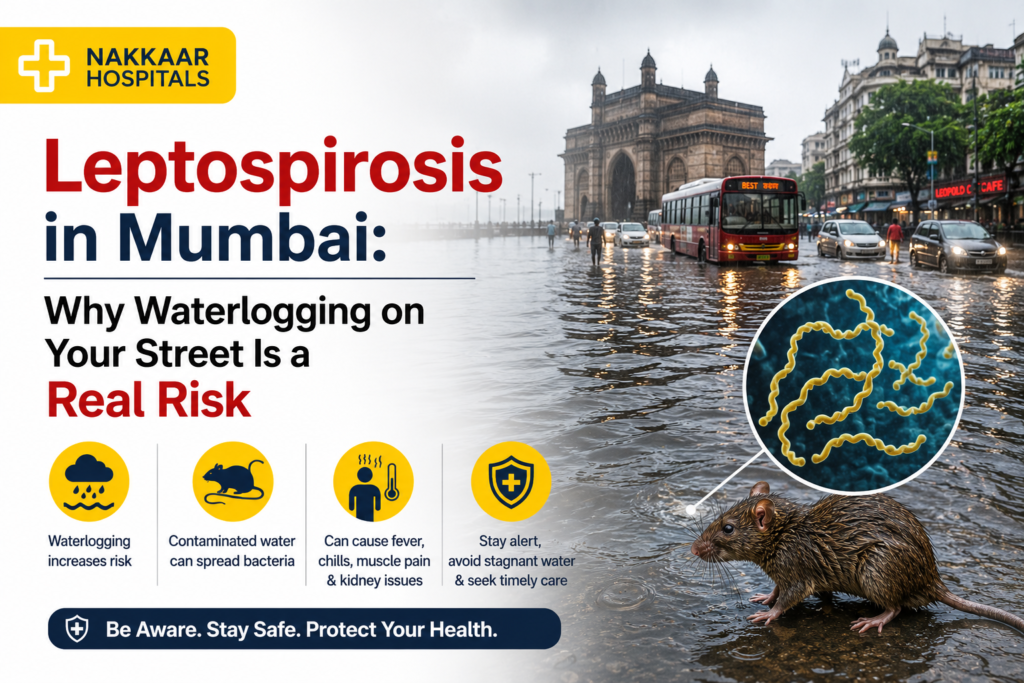
Every June, the same scene repeats itself across Mumbai. Ankle deep water on the road outside your building. Kids splashing through puddles on their way back from school. Someone wading through a flooded lane because there’s simply no other way to get home. Most of us walk through it without a second thought, because that’s just monsoon life in this city.
But that water sitting outside your gate isn’t just dirty. It’s often carrying something far more dangerous than mud. Leptospirosis is a bacterial infection linked to Waterlogging Diseases, and it’s one of the biggest reasons doctors across Mumbai dread every rainy season. In this post, we’ll walk through the real Leptospirosis Causes, the Leptospirosis Symptoms to watch for, how a Rat Urine Infection actually spreads, when it turns into the more serious Weil’s Disease, and the Leptospirosis Prevention steps that genuinely help during monsoon.
What Exactly Is Leptospirosis
Leptospirosis is a bacterial infection caused by Leptospira bacteria, which live in the urine of infected animals, mostly rats, but also stray dogs and cattle. When it rains heavily and the drains overflow, that urine mixes into the stagnant water on your street. If you walk through it, especially with a cut, scratch, or even a small crack in your heel, the bacteria can enter your bloodstream.
This is one of the main leptospirosis causes doctors in Mumbai see repeatedly during monsoon. You don’t need to fall into a drain or swallow the water. Standing in ankle deep floodwater for even a short time is enough if your skin isn’t intact.
In severe cases, this infection is known as Weil’s disease, where the bacteria attack the liver and kidneys and cause jaundice, internal bleeding, and organ failure. It sounds extreme, but Mumbai has lost lives to exactly this every single monsoon, including cases where the person waited too long before getting checked.
Why Waterlogging Makes This a Mumbai Problem
Waterlogging diseases aren’t unique to Mumbai, but the city’s drainage struggles make it a hotspot. Several low lying areas across the suburbs stay flooded for hours, sometimes days, after heavy rain. Add in open drains, garbage that blocks water flow, and a large rat population, and you have ideal conditions for a rat urine infection to spread through the water sitting right outside your home or shop.
If you work outdoors, walk to the station through flooded lanes, or send your kids out to play once the rain lets up a bit, your exposure risk goes up every single day the water doesn’t recede.
Leptospirosis Early Signs You Shouldn’t Brush Off
This is where most people go wrong. The Leptospirosis Early Signs look almost identical to a regular viral fever, which is exactly why so many cases get missed or treated late.
Watch out for:
- Sudden high fever that comes on fast
- Severe headache, often described as worse than a normal fever headache
- Muscle pain, particularly in the calves and lower back
- Chills and general weakness
- Red or irritated eyes without any discharge
- Nausea or vomiting
These Leptospirosis Symptoms usually show up anywhere between 2 to 14 days after contact with contaminated water. That gap is part of the problem. People forget they waded through a flooded lane a week ago and assume it’s just a seasonal fever.
If it’s left untreated and progresses, you start seeing more serious Leptospirosis Risk Factors turning into real complications, jaundice, reduced urine output, breathing trouble, or bleeding. At that stage, it’s no longer a simple fever, it’s an emergency.
Leptospirosis vs Dengue: How to Tell Them Apart
Every monsoon in Mumbai, dengue and leptospirosis cases climb at the same time, and honestly, even doctors have to be careful because the early presentation overlaps so much. Fever, body ache, headache, nausea, both diseases can start off looking the same on day one or two.
A few things tend to point more toward leptospirosis:
- Calf muscle tenderness that’s unusually pronounced
- Redness in the eyes without any itching or discharge
- Fever that comes with chills and doesn’t follow the typical dengue pattern
- A recent history of walking through waterlogged streets or floodwater
Dengue, on the other hand, is more commonly linked to rashes, bleeding gums, and a sharp drop in platelet count. But here’s the honest truth, you cannot reliably tell them apart just by symptoms. Co-infections happen too. This is exactly why testing matters instead of guessing at home or self-medicating.
Leptospirosis Diagnosis and Testing
If you’ve had a fever for more than a day or two during monsoon, especially with any recent exposure to flooded water, don’t just wait it out. A doctor will usually recommend a Leptospirosis Blood Test, most commonly the IgM ELISA or MAT test, to confirm the diagnosis. Basic blood work like CBC, liver function, and kidney function tests are also done alongside, since these organs are what the infection targets when it turns severe.
Early Leptospirosis Test results genuinely change the outcome. Nearly every serious or fatal case reported in Mumbai over the years shares one pattern, the person delayed seeking medical help by several days.
Leptospirosis Treatment That Actually Works
The good news is that Leptospirosis Treatment is straightforward and highly effective when started early. Doctors typically prescribe antibiotics like doxycycline or penicillin, and mild cases usually recover fully within a couple of weeks.
The problem is when treatment starts late. Once the infection has already affected the kidneys or liver, patients often need hospitalization, IV antibiotics, and much closer monitoring. This is a big part of why we always tell patients, please don’t self-medicate with leftover antibiotics from your medicine cabinet. Get tested, get the right diagnosis, and let a doctor decide the dosage and duration based on your actual condition.
Leptospirosis Prevention Tips for Monsoon
You can’t control the waterlogging outside your building, but you can control your exposure and how you respond to it.
- Avoid walking through stagnant or floodwater whenever you can, even if it means taking a longer route
- Wear waterproof boots or closed footwear if you absolutely have to wade through water
- Cover any cuts, wounds, or scratches with waterproof bandages before stepping out
- Wash your legs and feet thoroughly with soap and clean water immediately after exposure
- Keep your surroundings free of garbage that attracts rats
- Don’t let kids play in flooded lanes, no matter how tempting it looks after the rain stops
- If you know you’ve been in contaminated water for a while, ask your doctor about preventive antibiotics, especially if you’re in a high risk area
When to See a Doctor
If you’ve had a fever for more than 24 to 48 hours during monsoon, particularly with muscle pain, chills, or any recent contact with waterlogged streets, don’t wait it out at home. This applies even more if you notice yellowing of the eyes or skin, reduced urination, or breathing difficulty. These are signs the infection may already be affecting your organs.
Rainy Season Infections don’t stay mild if you ignore them, and leptospirosis is one of the few monsoon illnesses where a delay of even a few days can be the difference between a quick recovery and a hospital admission.
If you’re looking for a Leptospirosis Doctor in Bhandup or need Leptospirosis Treatment in Mumbai, the team at Navkaar Hospitals is here to help, don’t wait for symptoms to get worse before walking in. The same applies if you’re searching for a Monsoon Fever Hospital in Mulund or a Viral Fever Treatment Hospital in Mumbai, get tested early rather than guessing whether it’s “just a viral fever.” A same day blood test can tell you what days of uncertainty cannot.
Mumbai’s monsoon isn’t going anywhere, and neither is the waterlogging. But knowing the early signs, understanding your risk, and acting fast if fever hits can genuinely keep this from turning into something serious.